Maha Jouini
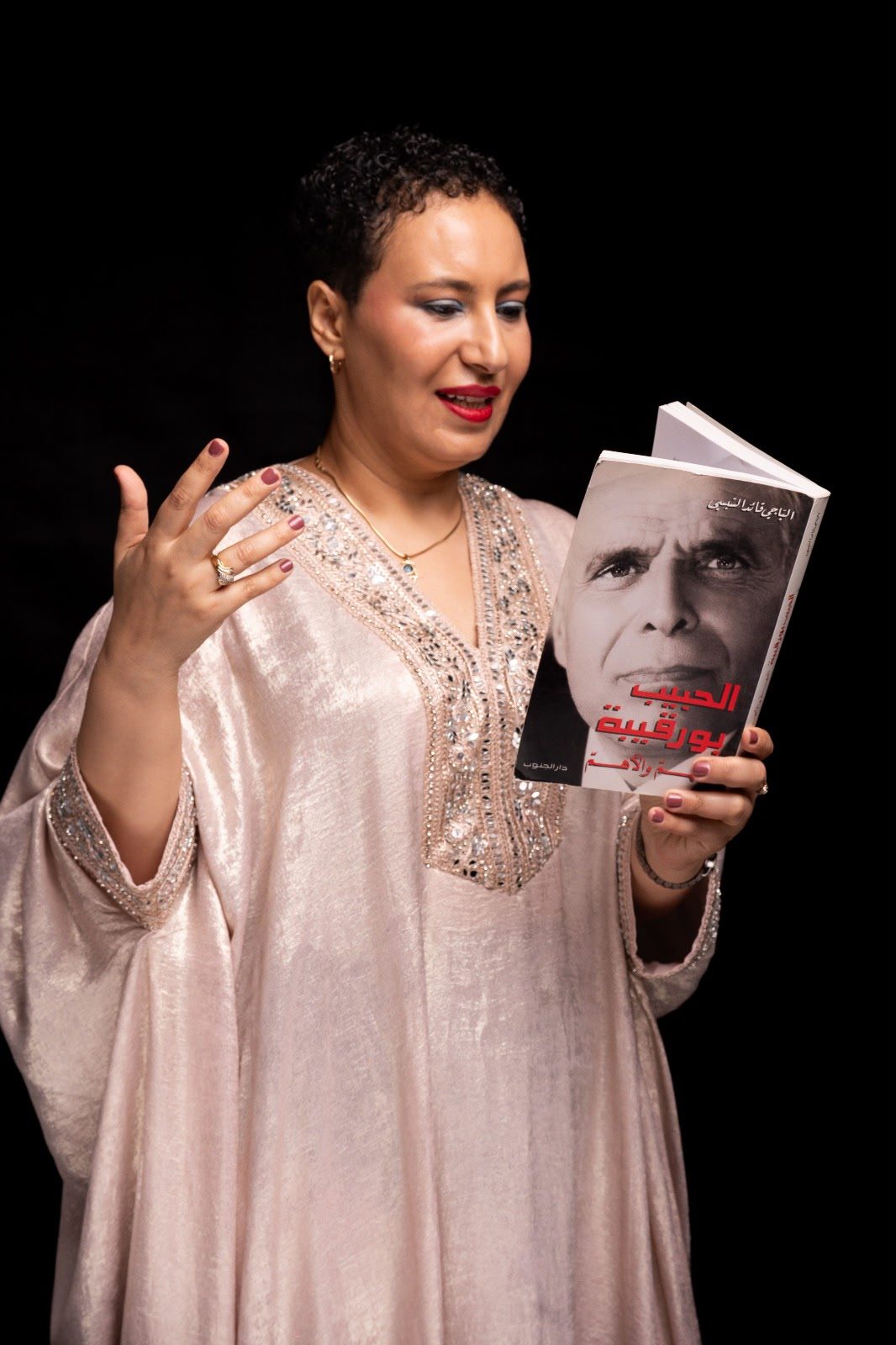
North African AI ethicist, researcher, founder and Arabic writer working at the intersection of artificial intelligence, decolonial technology, health justice and public-interest innovation.
Her work focuses on the governance of AI in contexts too often excluded from mainstream technological design — including African societies, Arabic-speaking communities, women’s health, and vulnerable populations living at the edges of data, language, and power.
She is the founder of HIKMA AI, a media, research and public education platform reconnecting artificial intelligence with wisdom, dignity and the intellectual traditions of Africa and the Arab world. She is also the founder of CHIFAA, a survivor-led AI initiative supporting women living with breast and cervical cancer in North Africa through culturally grounded, multilingual and ethically governed technology.
Over more than a decade, Maha has shaped AI policy, digital rights and public-interest technology agendas across Africa and Europe. She has served as a Research Fellow at the Global Center on AI Governance, a Module Lead for UNESCO’s AI Ethics MOOC, a consultant for GIZ Tunisia, a researcher and supervisor for the Global Index on Responsible AI (GIRAI), and a Digital Transformation Consultant in Mauritania. She is also part of UNFPA Tunisia’s pool of experts contributing to a study on Artificial Intelligence and Technology-Facilitated Gender-Based Violence (TF-GBV) in Tunisia.
Her research and policy work focuses on responsible AI, data sovereignty, digital colonialism and Africa-led approaches to AI governance, including a Springer book chapter on Africa-led responsible AI design. She is the winner of the She Shapes AI Global Award in Thought Leadership in AI.
Alongside her work in technology and policy, Maha is an Arabic writer and short-story author. Her published literary works include A Lover from Africa and The Last Dance: From Carthage to China. Her writing has been recognised as part of contemporary Arab creative production, featured by the Centre for Women’s Studies at Tunisia’s Ministry of Women and the National Library of Tunisia.
Being realistic means preferring a modest reform that enables another, to an impossible miracle. — Habib Bourguiba, former President of Tunisia
Why I founded HIKMA
I founded HIKMA AI because wisdom without power changes nothing — and power without wisdom destroys everything.
For too long, the global AI conversation has been built as though Africa and the Arab world exist only to be studied, governed, translated, or “included” after the rules are already written. A 34.7% error rate on dark-skinned faces. Arabic — spoken by more than 400 million people — treated as a low-resource language by the systems that will govern it. Medical AI trained on Western bodies, then deployed on ours. These are not oversights. They are what happens when technology is built without us in the room.
HIKMA was built from a different premise: that we were never latecomers to knowledge, ethics or public reason. Long before Silicon Valley, our intellectual traditions built some of the world’s great centres of learning, law, philosophy and medicine. The question is not whether we have something to contribute to the future of AI. The question is why that future has been allowed to proceed as though our traditions, languages and communities were intellectually optional.
Bourguiba once wrote that realism means choosing the modest reform that makes the next one possible. HIKMA is that first reform — not a utopia, but a platform. A media, research and public education space rooted in wisdom, accountable to our communities, and unwilling to accept that intelligence can be separated from dignity, or technology from moral responsibility.
I built HIKMA to insist that Africa and the Arab world are not footnotes to the age of artificial intelligence. We are among the voices that must define what ethical, human and politically accountable AI should be.
What does it mean to build intelligence worthy of humanity? We are its continuation.