
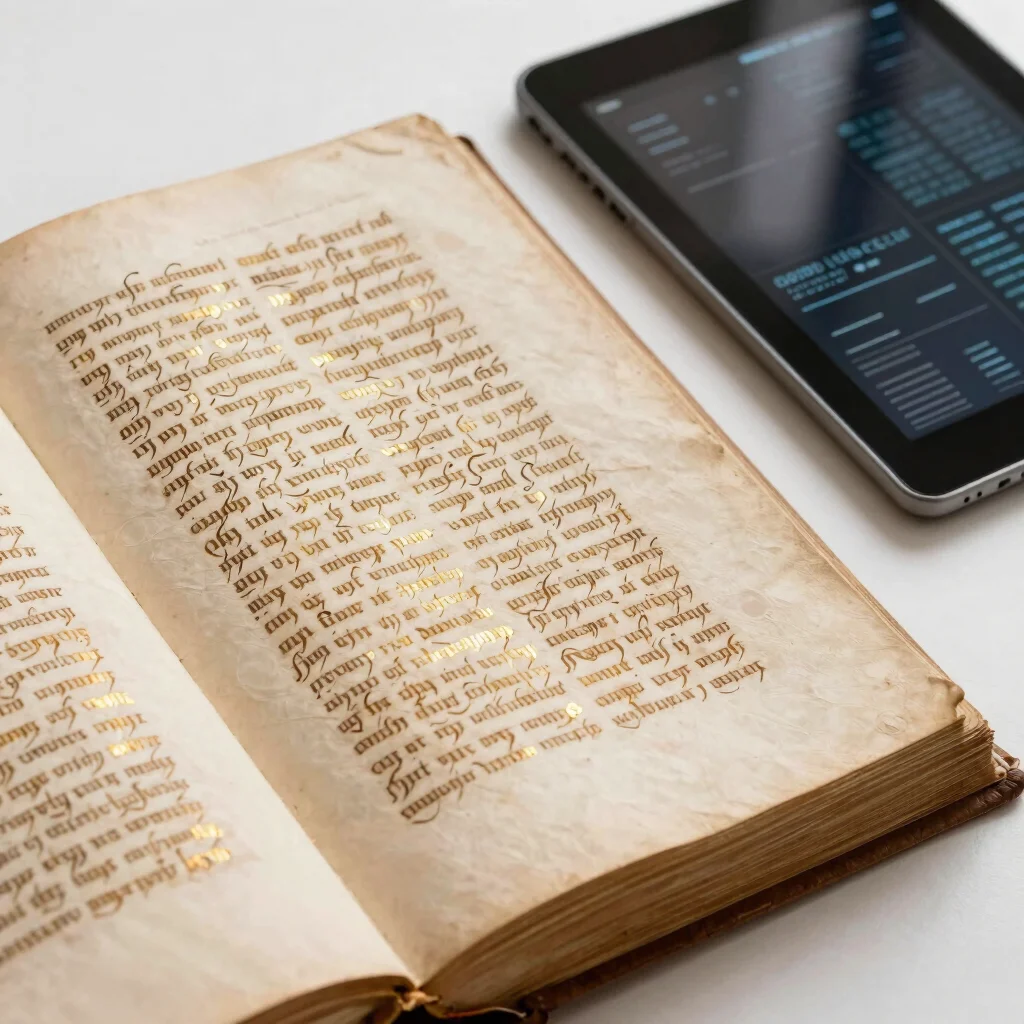
Long before the advent of digital computers, historical centers of learning across Africa and the Middle East developed sophisticated methods for cataloging knowledge, verifying sources, and analyzing complex texts. The historical libraries of Timbuktu, Fez, and Cairo were not merely static repositories; they were active research institutes governed by rigorous methodological traditions. Revisiting these archival techniques offers fresh perspectives for modern computational challenges in data validation and knowledge retrieval.
Algorithmic Precision in Historical Archives
Scholars in ancient academies utilized systematic cross-referencing, margin annotations, and chain-of-transmission validation to verify historical and legal texts. These historical practices closely parallel modern graph databases, retrieval-augmented generation, and data lineage tracking used in machine learning today.
By formalizing these historical verification systems into machine learning pipelines, researchers can build systems that exhibit higher factual consistency and lower rates of algorithmic hallucination. Integrating classical commentary structures into document processing allows algorithms to analyze semantic nuances with historical depth.
Preserving Historical Textual Corpora at Scale
Digitizing and analyzing millions of delicate historic manuscripts requires specialized computer vision and optical character recognition models designed for complex handwritten scripts. Standard text recognition software often struggles with historical calligraphic variations, vocalization marks, and non-linear page layouts.
Developing custom neural networks trained on diverse manuscript traditions protects endangered heritage while expanding the training data available for regional languages. This dual mission ensures that ancient wisdom directly informs contemporary technological tools, bridging centuries of intellectual achievement.
A Legacy of Intellectual Rigor
The preservation of historical manuscript knowledge is not an exercise in passive nostalgia, but an active contribution to global scientific progress. By marrying historical scholarly rigor with state-of-the-art machine learning, researchers establish a continuum of learning that honors past intellectuals while inspiring future technological frontiers. True progress occurs when innovation stands proudly on the shoulders of historical wisdom.